
Quick Answer
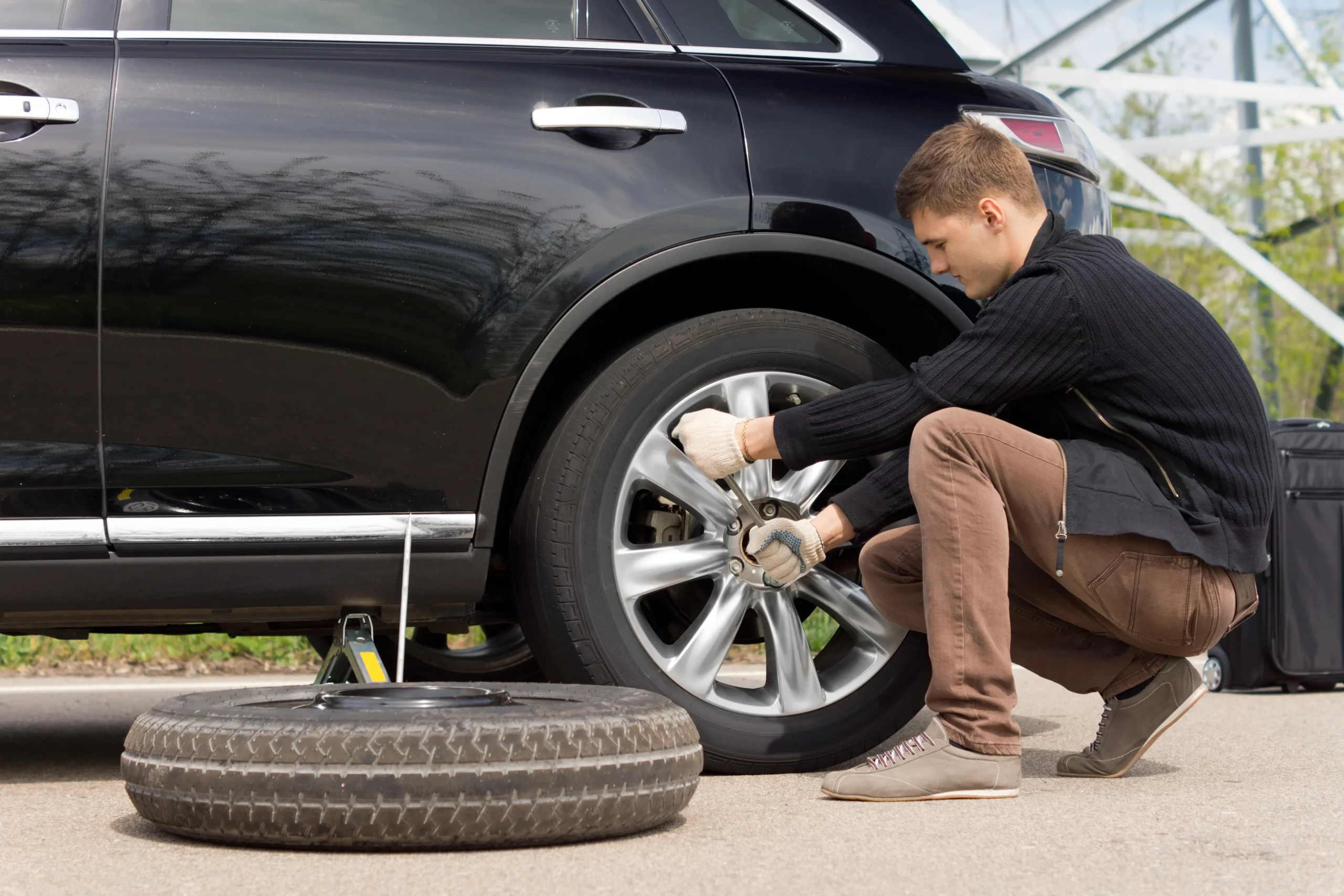
To change a flat tire safely, park on level ground, apply the parking brake, and place wheel chocks. Loosen the lug nuts slightly while the car is grounded, position the jack under the vehicle’s metal frame, and lift. Remove the lug nuts and flat tire, mount the spare, hand-tighten the nuts, lower the car, and fully tighten in a star pattern.
What You’ll Need
Most vehicles come equipped with the basic tools needed to change a tire, typically stored in the trunk beneath the cargo mat.
| Tool / Item | Purpose | Included with Vehicle? |
| Spare tire (donut or full-size) | Replaces the flat tire | Yes (usually) |
| Scissor or hydraulic jack | Lifts the vehicle off the ground | Yes |
| Lug wrench (tire iron) | Loosens and tightens lug nuts | Yes |
| Wheel chocks (or bricks/stones) | Prevents accidental rolling | Rarely (recommended to buy) |
| Tire pressure gauge | Checks spare tire inflation | No |
| Work gloves & flashlight | Protection and nighttime visibility | No |
| Torque wrench | Torques lug nuts to manufacturer spec | No (best practice for final check) |
Step-by-Step Instructions
Follow these steps sequentially to safely swap your flat tire for the spare.
1.Find a Safe Location and Secure the Vehicle: Never change a tire on an incline or soft shoulder.
Move the vehicle to a level, stable surface away from moving traffic. Turn on your hazard lights, engage the parking brake fully, and shift into Park (automatic transmission) or Reverse (manual transmission). Place wheel chocks behind the rear tires if changing a front tire, or in front of the front tires if changing a rear tire.
2.Remove Wheel Cover and Loosen Lug Nuts: Break resistance while tires are firmly on the ground.
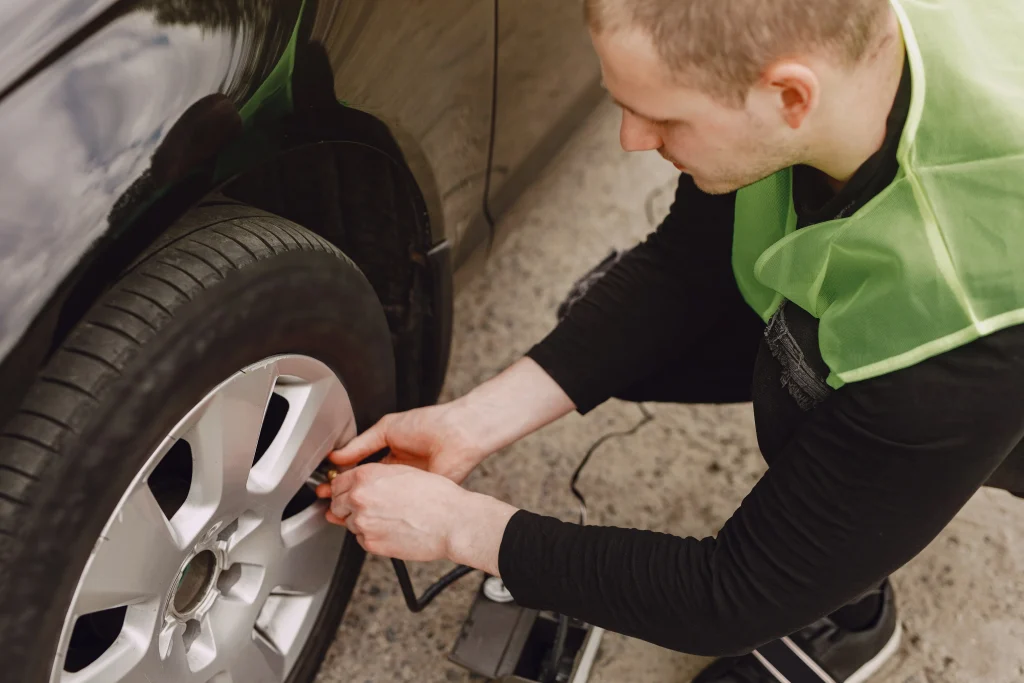
If your vehicle has a hubcap or wheel cover, pry it off using the flat edge of your lug wrench. Fit the wrench onto each lug nut and turn counterclockwise to break the initial resistance. Turn each nut roughly 1/2 to 1 full turn. Do not remove the nuts completely yet.
3.Position the Jack and Lift the Vehicle: Consult your owner’s manual for dedicated pinch weld points.
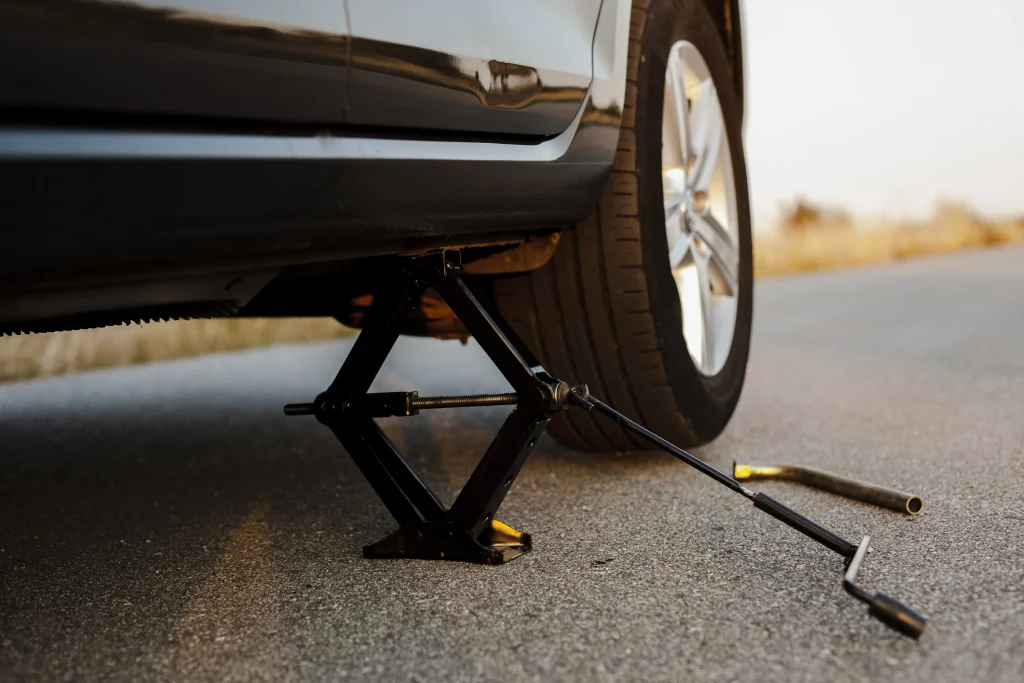
Locate the reinforced metal jacking point on the vehicle’s frame near the flat tire. Turn the jack handle clockwise to raise the car until the flat tire clears the ground by approximately 6 inches (15 cm). This extra clearance ensures enough room to fit the fully inflated spare tire.
4.Remove the Flat Tire: Keep lug nuts grouped together in a clean spot.
Unscrew the loosened lug nuts completely by hand or with the wrench. Pull the flat tire straight off the wheel studs toward you. Set the removed tire flat on the ground beneath the vehicle frame as an extra safety measure in case the jack slips.
5.Mount the Spare Tire: Align rim holes directly with wheel studs.
Lift the spare tire onto the wheel hub, lining up the rim holes with the threaded studs. Push it back until it sits flush against the hub face. Thread the lug nuts back on by hand clockwise until they are snug to prevent cross-threading. Use the wrench to make them firm, but save full tightening for when the car is grounded.
6.Lower the Car and Torque the Lug Nuts: Always tighten in a criss-cross/star sequence.
Lower the vehicle until the spare tire rests on the pavement and supports partial weight, then remove the jack. Tighten the lug nuts with the lug wrench using a star (criss-cross) pattern. This ensures even pressure across the wheel hub. Once fully tightened, lower the car completely and stow all tools and the damaged tire.
Common Mistakes to Avoid
- Lifting from the wrong point: Jacking under floorboards, plastic trim, or suspension arms can bend the chassis or cause the car to drop. Always use the manufacturer-specified pinch weld.
- Loosening lug nuts while raised: Trying to break seized lug nuts once the wheel is airborne causes the wheel to spin uncontrollably and can destabilize the jack.
- Tightening nuts in a circle: Going consecutively around the circle can warp the brake rotor or seat the wheel unevenly. Always tighten in an alternating star pattern.
- Ignoring the spare tire’s pressure: Compact “donut” spares usually require 60 PSI, which is significantly higher than standard car tires (typically 32–36 PSI). A flat spare leaves you stranded twice.
- Over-speeding on a donut: Temporary spare tires are not engineered for highway speeds or long distances.
Safety Notes: When to Call Roadside Assistance
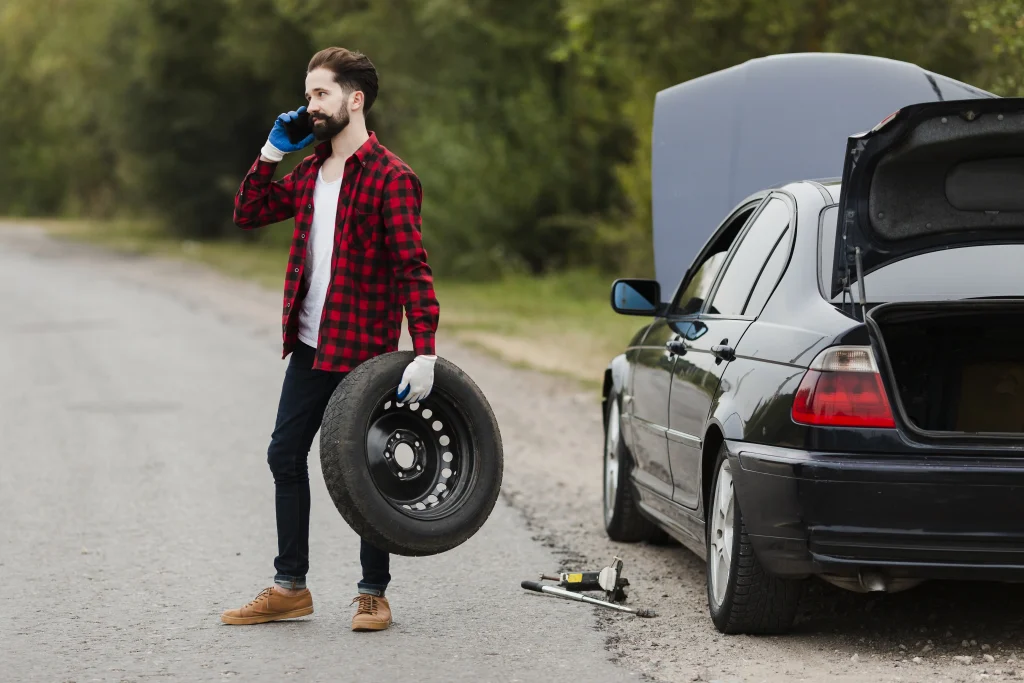
Changing a tire carries inherent mechanical risks. Do not attempt a roadside tire change if:
- You are on a narrow highway shoulder: If you cannot pull completely off the travel lane or a physical barrier separates you from high-speed traffic, stay buckled in your car and call emergency highway services or roadside assistance.
- The ground is soft, muddy, or steeply sloped: Jacks sink easily into gravel, dirt, or hot asphalt, leading to vehicle slippage.
- The lug nuts are completely seized: Applying extreme leverage or jumping on the wrench can snap wheel studs or slip and cause bodily injury.
- You lack a functional spare or jack: Never rely on improvised supports like cinder blocks or tree limbs.
Frequently Asked Questions
How fast and far can you drive on a spare tire?
Most compact temporary spare tires (“donuts”) are rated for a maximum speed of 50 mph (80 km/h) and a maximum distance of 50 to 70 miles (80 to 110 km). They are designed only to get you to a repair facility. Full-size spare tires matching your other wheels can be driven normally once torqued correctly.
Can you change a tire without a jack?
No. You cannot safely remove a wheel and mount a replacement without lifting the vehicle using a jack rated for the vehicle’s curb weight. Attempting to use ditches, ramps, or makeshift supports poses a severe risk of fatal crushing injuries.
Which direction do you turn lug nuts to loosen them?
Standard vehicle lug nuts follow the common rule: turn counterclockwise (“lefty-loosey”) to loosen and clockwise (“righty-tighty”) to tighten.
Why do lug nuts need to be tightened in a star pattern?
Tightening in a criss-cross or star sequence distributes clamping force evenly across the wheel hub and rotor face. Uneven clamping can induce brake pedal pulsation, warp the brake rotor, or cause the wheel to wobble and loosen during transit.